Welcome to Weird Anime, a guide to the more obscure depths anime has to offer, est. 2010.
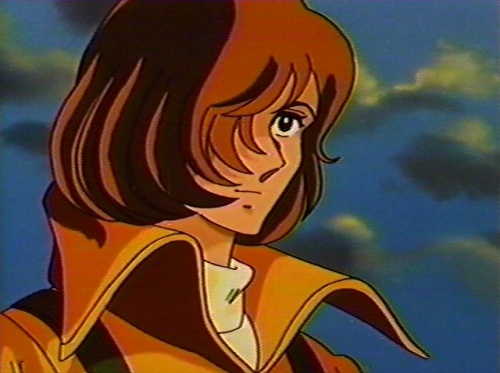
Area 88
1985, 3 episodes
Japanese pilot Shin Kazama is tricked by a so-called friend into a mercenary air-force that’s constantly at war in foreign lands. To regain freedom, he must accrue $1.5 million dollars, and therefore, he takes to the skies, each kill earning more valuable money. The set-up here is one of an action series and, indeed, Area 88 has its fair share of exciting aerial ’bouts, but the attention payed to the tortured psychology of its characters is what ultimately stands out. The finale, especially, is a tragic affair.
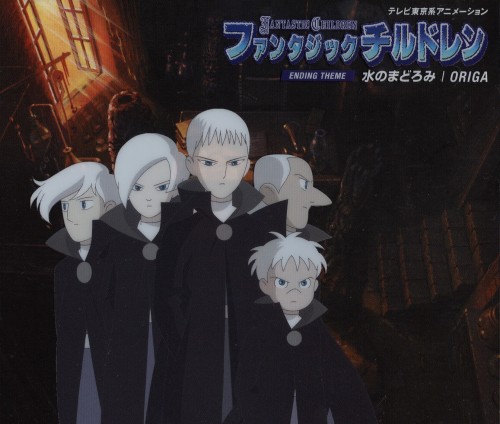
Fantastic Children
2004, 26 episodes
A set of immortal “children” are reborn every 12 years for half a millenia. A solitary girl, Helga, escapes her orphanage to find the place she can’t help but paint. Detectives and shady organizations. A massive amount of tangent storylines are presented by Fantastic Children, only to be seamlessly woven together and resolved in an unforgettable way. Fantastic Children is indeed fantastic, strikingly somber, and deeply morose.
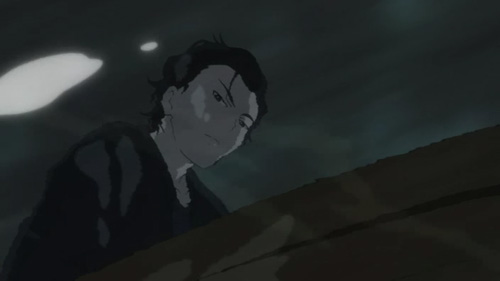
Ghost Hound
2007, 22 episodes
Ghost Hound blends artsy, abstract touches with symbolic, coming-of-age drama, quite an achievement for a show that runs the risk of degenerating into alienating philosophical exercises, regularly (yet accessabiliy) pondering mysticism and spirituality. Worthy of note is its distinct use of sound; the almost negligible, constant humming of power cables over head, the whirring of machinery and the dissonancent sound of a badly tuned radio. That unique mingling of discordant, unnatural noise creates an aural landscape of ill-ease, the perfect backdrop to the unravelling of Ghost Hound‘s dark secrets and supernatural mysteries.
Haibane Renmei
2002, 13 episodes
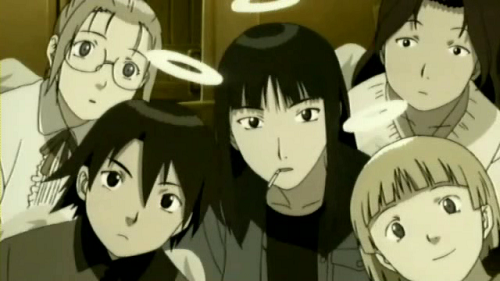
Haibane are born from cocoons as fully formed, adolescent girls with small wings. They remember a life before they were born, but retain no memory from it. They share their town with normal humans and neither humans nor haibane may pass the city walls. At the beginning of Haibane Renmei a new haibane, Rakka, has been born. She presses to discover why the wall exists, what lies beyond it and what the real purpose of a haibane’s new life is.
Infinite Ryvius
1999, 26 episodes
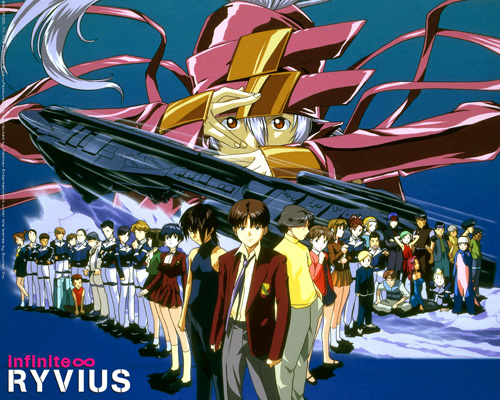
People often describe Infinite Ryvius as “Lord of the Flies… in Space!” It begins with a cliche cast of moody teenagers, but cuts them adrift in space. Lost, without any means of rescue and free of adult supervision, the kids (all 500+ of them) are forced to fend for themselves, resulting in a fascinating, ever changing sociological study of government and human nature. Between the spells of democracy and dictatorship, the still-developing moralities of the children are pushed to harrowing breaking points.
Kaiba
2008, 12 episodes
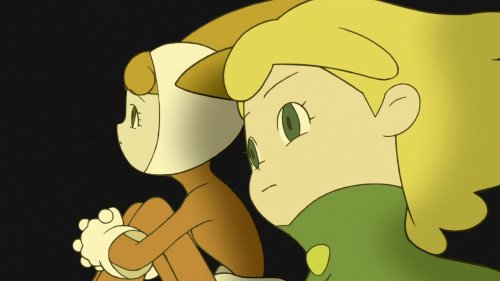
Kaiba is lovely, and sweet, and romantic, but it’s also tragic, and sad, and harsh. Aesthetically, the almost child-like art, oddly colourful and innocent, merely papers over a disturbing under-current of existentialism. It’s about a search for some truth in life, set within a universe where human memory, the very essence of one’s individuality, is readily transferred into tiny metal chips; our bodies traded and modified with all the levity of a feather. Surreal to a point, and no doubt the last episode is a testament to that, but take a leap of faith. This is different, but Kaiba isn’t artsy to a fault, it has a beating, romantic heart.
Kaiji
2007, 26 episodes
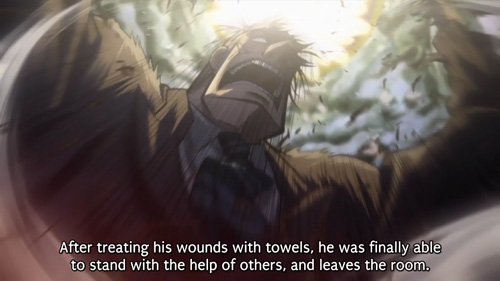
People die in this series. They get electrocuted, fall from the tops of sky-scrapers and are sent away as slave labourers; all that and for what? Money! Kaiji is about gambling. Society’s lesser lights are dredged up from Japan’s murkiest alleys and handed the opportunity to earn a lot of money, real fast. The games are simple; ‘Rock, Paper, Scissors’ is the first, it’s just a child’s game, right?
Kino’s Journey
2003, 13 episodes
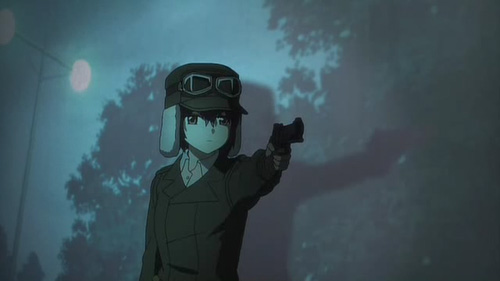
Kino and her talking motorcycle, Hermes, slowly travel from country to country, quietly observing the foreign cultures and societies they visit. Unflinchingly honest, sometimes pretty, others shocking, Kino’s Journey is allegorical and unafraid of showing the darker shades of human nature. It absolutely refuses to indulge in moral grandstanding, preferring instead to leave us to interpret things for ourselves. Animated sparsely and coloured faintly, it repeatedly conjures the feeling of a twisted old fairy-tale.
Magnetic Rose
1995, 1 episode (part of the Memories anthology)
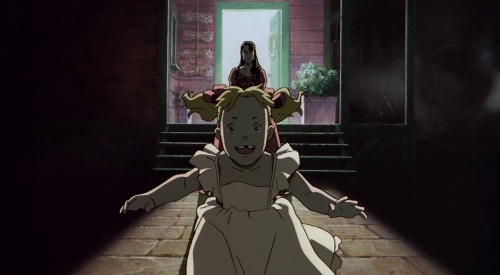
Magnetic Rose begins as a band of ragtag garbage-men follow up on a mayday call from a (deep) space station. They explore it, looking for survivors, but ghostly images haunt the long, dark corridors. This is an intense and disturbing film, then; not superficially, but in a way that’s fundamentally, psychologically disturbing. Tearing down any semblance of composure within these two (relatively normal) men, it tricks them and drags them into hell, but a beautifully drawn hell, at least.
Millennium Actress
2001, 1 episode (movie)
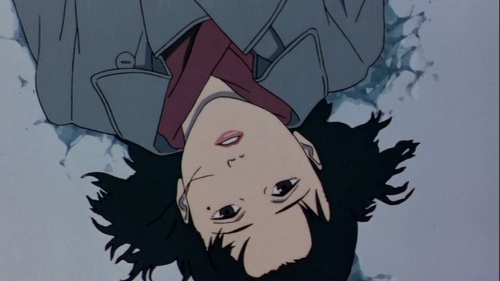
Our heroine, Chiyoko, is an actress in the twilight of her life, reminiscing about her long career in the Japanese film industry. Millennium Actress tells her story through the many roles she’s played, transitioning from far-flung science fiction to period drama, her real life interwoven with scenes from her films, expressing a kind of symbolic catharsis where every memory is coded with double meaning; abstract, full of life and action, but also underpinned with a deeper subtext. Years and years fly by, but she never gives up chasing the man she loves.
Noein: To Your Other Self
2005, 24 epsisodes
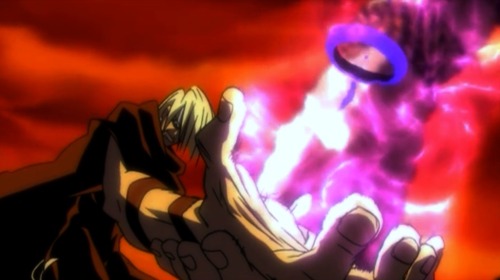
Noein is intense in both premise and execution: 15 years in the future, two possible versions of our own world are battling to either end all of time, or to save it. Key to the success of La’cryma, the future that wants to save the world, is finding the Dragon Torc. Which, as it happens, is incarnate in 2011 in the form a girl named Haruka. Requiring a fair amount of foreknowledge (or willingness to learn as you go along) of quantum physics, Noein will lose most of its viewers in the details, or its questionable character design. However, it ends on quite an endearing note, and has a generally creepy feeling to it throughout.
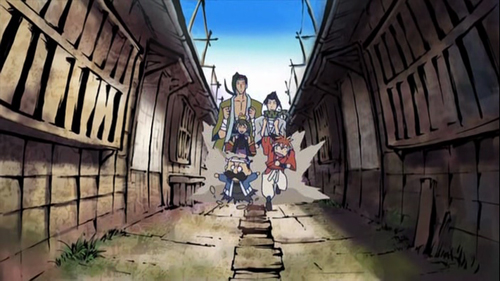
Oh! Edo Rocket
2007, 26 episodes
Oh! Edo Rocket is a testament to the fact that just because an anime is weird doesn’t mean it need be melancholy, dark, violent or stoic. Running gags, slapstick, toilet humor and a persistent carpe diem philosophy define the series. Oh! Edo Rocket has the blessing of finding its source material in a play: its scripting and pace bearing resemblance to Shakespeare at times. Supported by a 1930s-inspired sountrack and background art reminiscent of a sumi-e painting, the series suffers no production pitfalls. That said, its plot is simplistic: boy meets girl, girl wants to go to the moon in a rocket. A rocket made of fireworks, the firing of which are currently under prohibition by the Tokugawa Shogunate. As one might expect, madness ensues.
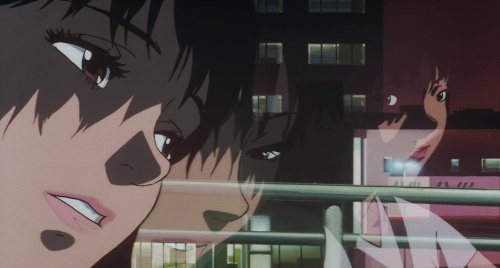
Perfect Blue
1998, 1 episode (movie)
In Perfect Blue, we follow Mima, a Japanese (pop) idol and wannabe actress. Her music career hasn’t turned out how she wanted, but she’s desperate to try acting now instead. Her old fans aren’t exactly happy with her new choice of career and slowly her mind begins to unravel, torn between the pressures of her new job and a paranoia over being stalked. Harrowing is a good way to describe this, horrifying is another; as every passing scene peels away yet another layer of Mima’s sanity, one feels as thoroughly disturbed as the heroine herself.
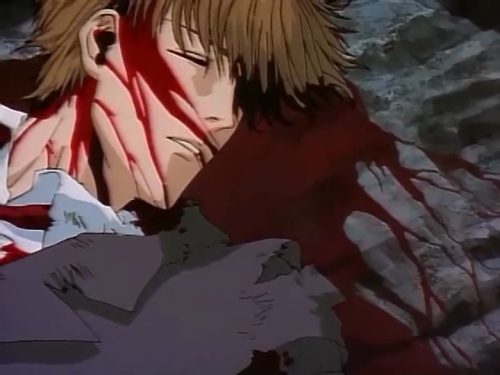
Petshop of Horrors
1999, 4 episodes
Petshop of Horrors comprises a quartet of episodic tales, each bringing with it a doomed new customer for the enigmatic petshop to delight in tormenting. The creatures inside are dangerous, yet hold a strange allure for their future owners. Lost to love or depressed by life, their damaged souls are bewitched by what they discover in the mysterious shop’s dark corners. Each story is creepy and affecting in its own way, placing as much emphasis on the customers’ intoxicating circumstances as the twisted events that follow.
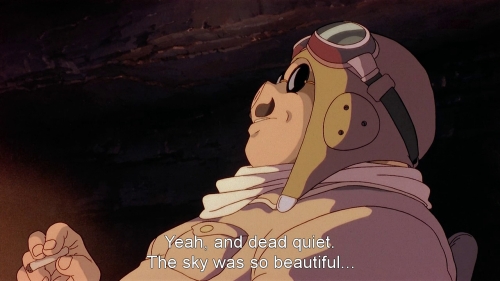
Porco Rosso
1992, 1 episode (movie)
Porco Rosso is about people trying to live happy lives, how time and place changes everything, and about freedom. The freedom of the skies over the Adriatic Sea, and how the best thing in the world is waking up every day knowing that you’ll be able to do what you love. It depicts a paradise lost, a fleeting era of adventure soon to be swallowed by fascism. Porco’s love for flight is undying, yet marked by the loss of his friends to war: that moment animated hauntingly, their aircraft clashing in blue skies and dancing in combat like moths to a flame.
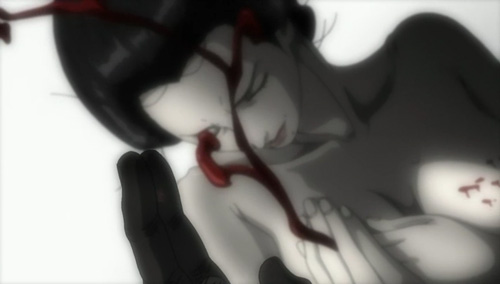
Shigurui
2007, 12 episodes
Shigurui is about as nasty as anime gets. Set in 17th century Japan, it details an all too grim observation of the morality (and subsequent deeds) of its country’s famous samurai. Fetishistic to the core and obsessed with the naked body, it revels in the exact moment of mortal damage, grimly determined to focus on every torn muscle and shattered bone, elevating itself to a work of grotesque art. Most disturbing is the violent philosophy of the samurai, not so much the heroes of lore as a swarm of erotically charged mass-murders with free license to inflict cruelty at whim!
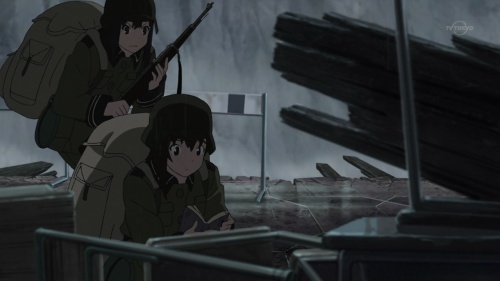
Sound of the Sky (Sora no Woto)
2010, 14 episodes
There’s an understated sadness to Sound of the Sky (Sora no Woto): a series that, on first glance, one may assume to be just another in the unending parade of cute-girls-doing-cute-things anime, but scratching beneath the surface reveals a darker core. The war-ravaged human race is on the very brink: electricity is scarce, the landscape barren and most adults packed off to the front-lines, where hulking mechanical tanks and inevitable doom awaits. The girls seem almost too innocent to understand the state the world’s in, but that innocence, for once, feels so vital. Also, the soundtrack is fantastic.
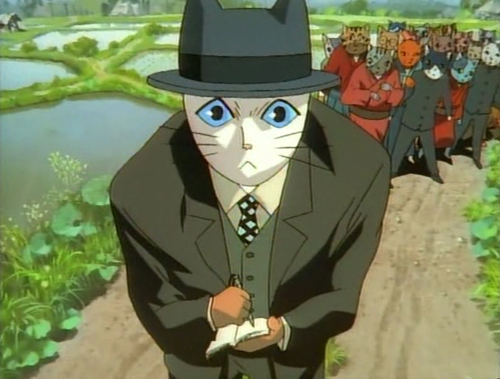
Spring and Chaos
1996, 1 episode (movie)
Directed by Shoji Kawamori (yes, that Shoji Kawamori), Spring and Chaos is a biography. It follows the “spring” of author, teacher and poet Kenji Miyazawa’s life (yes – that Kenji Miyazawa!). From a field in rural 1920s Japan to the shores of the afterlife, Spring and Chaos is a swirl of images. It is disconnected, disjointed, beautiful, tragic, like a thought that never quite makes it into words. Did I mention the cast are depicted as fully-dressed, walking, talking cats?
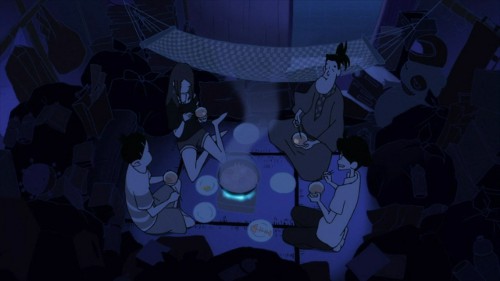
The Tatami Galaxy
2010, 11 episodes
In The Tatami Galaxy, we follow our nameless protagonist Watashi falling through a kaleidoscope of alternate universes in his search of his rose-coloured campus life. Narrated by him at the speed of a machine-gun, each episode begins at University as he joins another club. Sharp and surreal, one could quite easily describe it as a comedy, but there’s so much more to be had from this series. The animation is a joy to behold, but its core sentiment, one of romance and drama and inspiration, resonates deeply across Watashi’s landscape of looping despair.
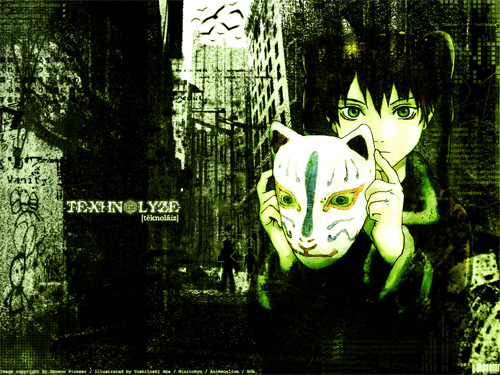
Texhnolyze
2003, 22 episodes
Laying deep under Earth’s surface is Lux, a city long since forgotten; Texhnolyze is set in a near-future where man has hit his evolutionary peak and thus turns to technology to force a change. It goes badly wrong when the citizens of Lux (originally criminals condemned to mine obscure materials) are abandoned. We follow the series’ main protagonist, Ichise, as he navigates the end of the world; Lux, his city, is devoid of natural beauty; a man-made, concrete jungle fallen into disrepair and lost of hope. Texhnolyze is a dark series, yet it has moments of sublime, sad beauty.
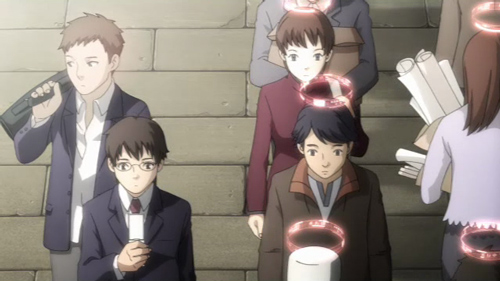
Time of Eve
2008, 6 episodes
Time of Eve is less an anime than it is a question: what would the world be like with androids? It explores this question poetically, through the interactions between androids and humans in a café. The premise of this café is unique, however: here, androids are required to turn off the projected halos which identify them. Given the 15-minute length of the episodes, the subject is dealt with in a light, yet highly poignant manner. Paired with lovely animation and a well-done soundtrack, the only thing one could ask of the series is more of it.
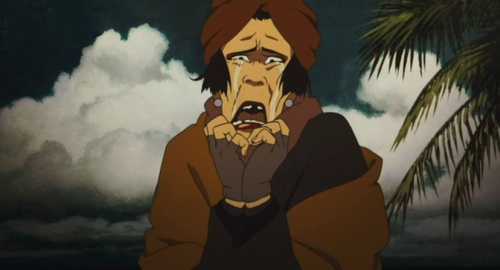
Tokyo Godfathers
2003, 1 episode (movie)
Set in the rarely seen murky back-streets of Japan’s famous capital just as Christmas is reaching its crescendo, the story of Tokyo Godfathers follows three homeless people who stumble upon a newly born baby left abandoned in a rubbish dump. What’s so refreshing about this film is how well-meaning it is, and whilst there’s a couple of very hard moments concerning the defencelessness of Japan’s homeless, it’s an ultimately optimistic (even fairy tale-esque) film towards the end, quite content to observe the plainer beauty of family and friendship… And of transexuality!
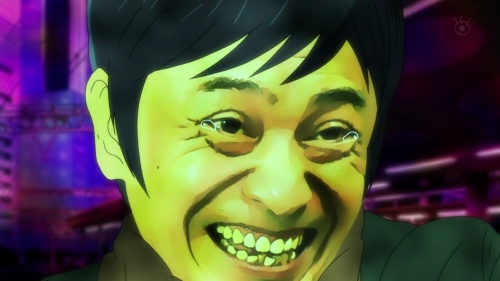
Trapeze
2009, 11 episodes
One could be forgiven for assuming Trapeze is a tad superficial. It has an intentionally surreal presentation that belies its parade of modern psychological disorders (like an obsessive-compulsive disorder involving mobile phones.) This is a very visual series, a fantastically realized splicing of vibrant colours, 2-dimensional anime tropes and hilariously contorted live-action actors, to say nothing of Denki Groove‘s smile-inducing opening and ending themes. Each episode brings with it a new patient for the bizarre psychologist Doctor Irabu to help, some of which are more interesting than others, but it’s always fun to watch.
Windy Tales
2004, 13 episodes
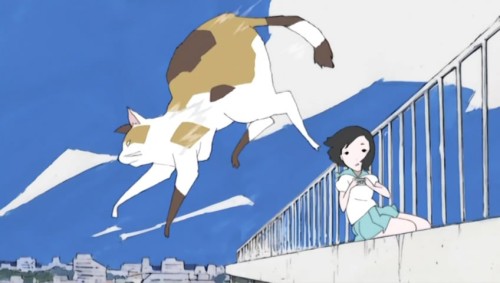
The friend who introduced me to Windy Tales described it as “the chillest anime I’ve ever seen” and really, that description holds. Windy Tales has an aesthetic to rival beloved Weird Anime director Masaaki Yuasa’s strangest works, but a breezy, somewhat mystical attitude. A group of wind users – children, adults and cats who can control the wind. Instead of launching into any of the expected narratives (mutant outcasts, or superpowered heroes), for example) Windy Tales simply continues to amble along quietly, like the wind.
Please feel free to chime in with your own suggestions for Weird Anime using the comment form below.
Index of Weird Anime
- Area 88 (1985, OVA)
- Fantastic Children (2004, TV)
- Ghost Hound (2007, TV)
- Haibane Renmei (2002, TV)
- Infinite Ryvius (1999, TV)
- Kaiba (2008, TV)
- Kaiji (2007, TV)
- Kino’s Journey (2003, TV)
- Magnetic Rose (1995, Short)
- Millennium Actress (2001, Movie)
- Noein: To Your Other Self (2005, TV)
- Oh! Edo Rocket (2007, TV)
- Perfect Blue (1998, Movie)
- Petshop of Horrors (1999, OVA)
- Porco Rosso (1992, Movie)
- Shigurui (2007, TV)
- Sound of the Sky (Sora no Woto) (2010, TV)
- Spring and Chaos (1996, Movie)
- The Tatami Galaxy (2010, TV)
- Texhnolyze (2003, TV)
- Time of Eve (2008, ONA)
- Tokyo Godfathers (2003, Movie)
- Trapeze (Kuchu Buranko) (2009, TV)
- Windy Tales (2004, TV)